What You'll Learn
- Why dental practices founded before 1995, which started out on manual "pegboard" bookkeeping systems built only for cash and checks, are especially exposed to embezzlement today.
- Prosperident CEO David Harris's central analogy: decades of mismatched software patches on top of old manual systems have left many practices' financial controls resembling "the ugliest filling ever with no structural integrity at all."
- How modern payment complexity, including direct deposits, CareCredit, and virtual credit cards, has outgrown the ad hoc controls that were only ever designed for cash and check payments.
- Why COVID-19-era and inflation-driven financial pressure has made these patched-together, structurally weak bookkeeping systems even easier for a trusted office manager to exploit.
The Ugliest Filling Ever
Let’s think about the control systems in place in your practice. Everything from the “balancing” done by staff at the end of each day to what you as a practice owner review to how the burglar alarm in your practice operates.
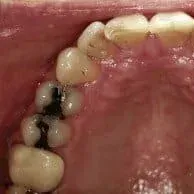
The systems that most practices have can be analogized to a big filling in a molar.
If you started your practice before 1995, or if you bought a practice from someone who started it before 1995, the original systems in your practice probably pre-dated computerization. Those systems were implemented at a time when the only ways that practices got paid were cash and checks; direct deposits to a practice’s bank account, third party payers like CareCredit, and the evil known as virtual credit cards did not exist.
So our mental picture of this filling should start with amalgam. Furthermore, let’s assume that dental school didn’t provide any training on this particular type of filling, so, while the dentist starting the practice did their best, it was a pretty crude filling.
It probably should have completely removed and started over, but the practice owner was busy and didn’t have the time, so the original amalgam filling got patched. Trying to adapt pre-computerized (“pegboard”) systems to computerized practices is like patching the original amalgam filling with composite. And to make it worse, the dentist was busy doing (real) fillings on patients, so the patching job was handed to the office manager.
Over the ensuing decades, the practice owner attended some courses where practice systems were discussed. There may have been an ownership transition. Several office managers came and went. A consultant or two may have had involvement as well.
Let’s visualize this as various people looking at our hideous filling and deciding to fix parts of it. Some of the original amalgam needed replacing, and much of the original composite repair is also breaking down. So, it received several additional fixes by different people, each using a different filling material.
By now you probably have a mental picture of the ugliest filling ever with no structural integrity at all. In real life, this restoration probably could not withstand the onslaught of a single stick of gum.
Embezzlement in dentistry is clearly on the increase (see this post). The breeding ground for much of the embezzlement we see is broken practice systems. The well-intended patching, plus the increasing complexity of practice financial operations over time, combined with the financial pressures exerted by Covid and the current inflationary climate, have left practice owners vulnerable.
Financial Health Matters as Much as Clinical Excellence.
Prosperident's First Look Financial Review gives you a complete picture of your practice's financial health—because protecting what you've built is just as important as the care you deliver.
Concerned about embezzlement in your practice?
Prosperident is dentistry’s embezzlement expert. Talk to us confidentially — there’s no obligation.
Let’s think about the control systems in place in your practice. Everything from the “balancing” done by staff at the end of each day to what you as a practice owner review to how the burglar alarm in your practice operates.
The systems that most practices have can be analogized to a big filling in a molar.
If you started your practice before 1995, or if you bought a practice from someone who started it before 1995, the original systems in your practice probably pre-dated computerization. Those systems were implemented at a time when the only ways that practices got paid were cash and checks; direct deposits to a practice’s bank account, third party payers like CareCredit, and the evil known as virtual credit cards did not exist.
So our mental picture of this filling should start with amalgam. Furthermore, let’s assume that dental school didn’t provide any training on this particular type of filling, so, while the dentist starting the practice did their best, it was a pretty crude filling.
It probably should have completely removed and started over, but the practice owner was busy and didn’t have the time, so the original amalgam filling got patched. Trying to adapt pre-computerized (“pegboard”) systems to computerized practices is like patching the original amalgam filling with composite. And to make it worse, the dentist was busy doing (real) fillings on patients, so the patching job was handed to the office manager.
Over the ensuing decades, the practice owner attended some courses where practice systems were discussed. There may have been an ownership transition. Several office managers came and went. A consultant or two may have had involvement as well.
Let’s visualize this as various people looking at our hideous filling and deciding to fix parts of it. Some of the original amalgam needed replacing, and much of the original composite repair is also breaking down. So, it received several additional fixes by different people, each using a different filling material.
By now you probably have a mental picture of the ugliest filling ever with no structural integrity at all. In real life, this restoration probably could not withstand the onslaught of a single stick of gum.
Embezzlement in dentistry is clearly on the increase (see this post). The breeding ground for much of the embezzlement we see is broken practice systems. The well-intended patching, plus the increasing complexity of practice financial operations over time, combined with the financial pressures exerted by Covid and the current inflationary climate, have left practice owners vulnerable.
Financial Health Matters as Much as Clinical Excellence.
Prosperident's First Look Financial Review gives you a complete picture of your practice's financial health—because protecting what you've built is just as important as the care you deliver.

About the author
David Harris
Forensic CPA, CFE, CFF, FIADFE — Chief Executive Officer, Prosperident
David Harris is the Chief Executive Officer of Prosperident, the world's largest dental embezzlement investigation firm. A Forensic CPA, Certified Fraud Examiner, and Certified in Financial Forensics, he has led investigations into financial crime in dental practices since 1989 and speaks regularly to dental audiences across North America on detecting and preventing embezzlement.
Book a consultation with David ›