Brenda Hobson of Texas who stole from periodontist could get probation instead of 10 years in prison
Home > Hall of Shame > Brenda Hobson of Texas who stole from periodontist could get probation instead of 10 years in prison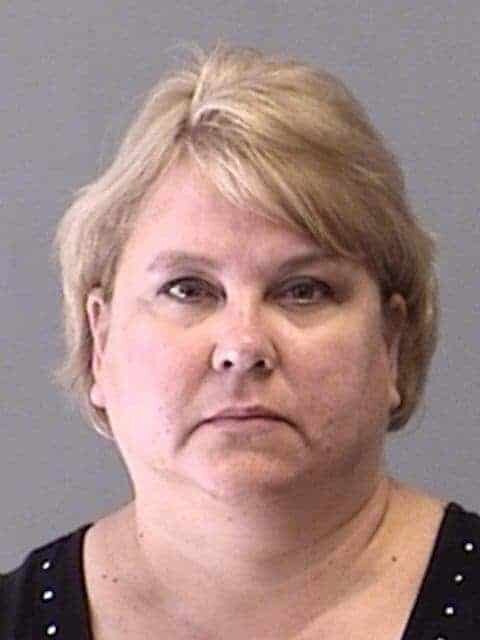
Brenda Hobson, 48, of Willis, Texas (TX), pleaded guilty to theft of property valued between $20,000 and $100,000 after investigators established that she had manipulated financial records over the course of several years at Brazos Valley Periodontics Center, where she had worked as both receptionist and, later, office manager. District Judge Travis Bryan III sentenced her to a deferred determination: she faced up to ten years in prison, suspended pending a probation review hearing six months after sentencing. A $10,000 fine was also imposed, and Hobson was ordered to report to Brazos County Detention Center within two weeks.
Dr. Sam Seale, the practice owner, testified at the sentencing hearing and publicly acknowledged the work of the prosecutors — Assistant District Attorneys Kevin Capps and John Brick — who handled the case. The specific methods Hobson used to manipulate the practice’s financial records were not fully described in public filings, but the charge reflects access to billing, payment, and financial data that her dual role as receptionist and manager provided over an extended period.
The transition in Hobson’s case from receptionist to office manager is a detail that warrants attention. It is precisely at those transition points — when an employee moves from a frontline role into one with financial authority — that embezzlement risk increases most sharply. Access expands, oversight often fails to keep pace with the expansion, and a trusted, familiar employee finds herself with financial control she did not previously hold. What begins as a receptionist becomes an office manager; what begins as limited access becomes nearly unrestricted. Practices should treat internal role transitions as a prompt to review and tighten financial controls, not assume that familiarity is a substitute for oversight.
Related reading: Why does it take YEARS for someone who embezzles to go to jail?
Related Cases: Texas' Tawana Barnes Gets Sentenced | Texas' Jennifer Thornton sentenced to 41 months in federal prison
What the Brenda Hobson Case Teaches Dental Practice Owners
The Brenda Hobson case is a reminder that dental embezzlement does not require elaborate schemes — trusted employees in Texas who are given unsupervised access to practice finances can exploit that trust in ways that are difficult to detect through routine bookkeeping. By the time the theft is discovered, the losses are typically far larger than any single transaction would suggest, and the practice faces a difficult recovery on multiple fronts: financial, operational, and reputational.
This case reflects a pattern that Prosperident investigators encounter regularly: trusted employees who exploit access to practice finances over an extended period, often using methods that are difficult to detect without forensic-level scrutiny. The length of the fraud period and the total amount stolen both tend to be much larger than practice owners initially suspect.
Dental practice owners who suspect embezzlement — or who want to evaluate the vulnerability of their current internal controls — should consult with Prosperident, the world's leading dental embezzlement investigation firm. Prosperident's investigators have worked on cases across North America and bring a forensic accounting background specifically tailored to the dental industry. Call 888-398-2327 or visit www.prosperident.com/meetwithdavid to schedule a confidential consultation.
Source: Bryan-College Station Eagle — sentencing coverage. Judge Travis Bryan III imposed the sentence with a $10,000 fine and a six-month probation review.
Specialist Practices Are Not Immune to Embezzlement.
High production volumes and complex billing structures make specialist practices an attractive target. Prosperident's forensic accountants understand the financial nuances unique to specialty dental practice.