Prosperident Pulse Archive — September 2013 to January 2014

Home > Media > Prosperident Pulse Newsletters > Prosperident Pulse Archive — September 2013 to January 2014

This archive collects five issues of the Prosperident Pulse newsletter from September 2013 through January 2014. Use the table of contents below to jump to any issue.

Issues in this archive


September 2013


Dental Embezzlement News
Issue #15 -- September 2013
Did you miss a previous newsletter?  We archive them here.
Upcoming Presentations
 
Here are some of the places you can hear us speak soon:
 
Savannah Dental Society, Savannah GA Sept 20, 2013
Western District Dental Society, Columbus GA Sept 26 2013
The DBS Companies, Troy, MI Oct 11, 2013
Nassau County Dental Society, Long Island NY Oct 25, 2013
Metropolitan Atlanta Study Group Oct 8 2013
American Association of Orthodontists Webinar Dec 4 and 10 2013
Arizona Orthodontists' Study Club Jan 13, 2014
Thomas P. Hinman Dental Meeting, Atlanta GA Mar 27, 2014
Star Of The North Meeting, St. Paul MN Apr 2014
TopsOrtho Software Topsfest, Tucson, AZ Mar 1 2014
Western Regional Dental Convention, Phoenix AZ Apr 3-5, 2014
Southern Association of Orthodontists, Nassau Bahamas Oct 2014
Pacific Coast Society of Orthodontists, Anaheim CA Oct 5, 2014


To book a fantastic speaker for your meeting, please call us at 888-398-2327 or send email to requests@dentalembezzlement.com
 
Read about us...
Are you working harder but earning less?  See this
 
See Dr. Mike DiTolla's interview with Prosperident CEO David Harris in Glidewell Labs' Chairside Magazine
 
Embezzlement -- it can happen in your practice DentistryIQ.com


IN THIS  NEWSLETTER
 
Ten things to do to embezzlement-proof your practice (a.k.a. "the myth of prevention")
 
There are many articles written with titles like that.  Typically they suggest some mix of controls and auditing that are designed to block embezzlement pathways that others have used in the past.
 
This "static" approach to managing embezzlement suffers from several flaws:
  • It ignores the active nature of embezzlement.  Most embezzlers make a careful study of the systems in place and then design an embezzlement that skirts them.
  • Embezzlers are adaptive.  If their method of stealing is suddenly blocked, they move quickly to a different methodology.
  • Virtually any procedure-based attack on embezzlement is doomed because embezzlers will selectively ignore policies that interfere with their stealing.
  • Making theft more difficult works well against "crimes of opportunity" where a thief can choose their target.  In embezzlement, there is only one potential target -- you.
  • Embezzlers are responding to some pretty powerful pressures when they steal.  You can't control these pressures, and more (or different) controls simply "channel" a thief into some other way to steal.  And in a dental office, they have lots of possibilities.
So what works?
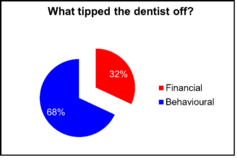
In a 2007 ADA survey of embezzlement victims, over two thirds of embezzlement was uncovered by behavioral (as opposed to financial) telltales.  The Association of Certified Fraud Examiners reports that over 80% of embezzlers display one or more behavioral traits of embezzlers.
 
Our Embezzlement Risk Assessment Questionnaire is the best tool for identifying behavioral indicia of embezzlement.  Dentists can obtain a free copy by emailing requests@dentalembezzlement.com
 
If you want to discuss your situation in confidence, we are happy to speak with you.  You can call us at 888-398-2327 , or send email to our embezzlement hotline which is checked daily by our on-duty investigator at emergency@dentalembezzlement.com   We will normally respond within 24 hours.
 
A Note From Our CEO:


We crossed a bit of a milestone with this edition of our newsletter.  This is our first newsletter that has broken the 8,000 subscriber threshold.  When we started our newsletter just over a year ago, I had no idea that it would get so big so quickly.  But something is changing in the world of dental embezzlement.
 
Five years ago, sometimes I felt like a lone voice in the wilderness when talking about dental office embezzlement.  I did an interview (it seems like a long time ago, but it was actually in the Spring of 2011) for the online dental publication DrBicuspid.com.  The interviewer captioned the article "Dentistry's Dirty Little Secret", a reference to the lack of discussion that this topic received in the dental media.
 
Wow, how things have changed.  A couple of years later, online and print articles on dental embezzlement abound.  I've spoken in lots of places, and we have many exciting speaking venues coming up.  You may not know this, but many of our investigators are great speakers.  These folks live and breathe embezzlement every day, and they can draw on this experience to deliver a presentation that is certain to hold the attention of an audience.  For example, one of our busiest speakers is Dr. Pat Little.  Pat is a former practicing dentist, when problems with his neck sent him towards a new career in accounting until consulting legend Linda Miles introduced him to us.  In addition to his investigation work, Pat is doing four speaking engagements this month and next, and he's also got an article in this month's Dental Economics.  Pat's a busy guy these days!
 
And it's also great to see that technology is now being applied against this problem.  We were thrilled to see the recent launch of Practice Safe Guard (PSG).  PSG is add-on software that works with one of the most popular practice management software types and operates in the background to identify suspicious transactions.  We think that PSG holds tremendous promise and we will be following its growth with interest.
 
Embezzlement strikes three in five dentists at some point in their careers, and I'm glad to see it finally getting the attention that it deserves. 


David Harris, CFE
Chief Executive Officer


Prosperident -- The world's largest dental investigation embezzlement firm

October 2013


Dental Embezzlement News
Issue #16 -- October 2013
Did you miss a previous newsletter?  We archive them here.
Upcoming Presentations
 
Here are some of the places you can hear us speak soon:
 
The DBS Companies, Troy, MI Oct 11 2013
Nassau County Dental Society, Long Island, NY Oct 25 2013
Metropolitan Atlanta Study Group Oct 8 2013
Patterson Dental / Lai Financial San Diego, CA Nov 8 2013
American Association of Orthodontists Webinar Dec 4 and 10 2013 (AAO members only)
Arizona Orthodontists' Study Club Jan 13 2014
TopsOrtho Software Topsfest, Tucson, AZ Feb 1 2014
Thomas P. Hinman Dental Meeting, Atlanta GA Mar 27 2014
Star Of The North Meeting, St. Paul, MN Apr 24 2014
Western Regional Dental Convention, Phoenix AZ Apr 3-5 2014
Denver Profitable Dentists Study Club, Denver, CO May 8 2014
Pacific Coast Society of Orthodontists, Anaheim, CA Oct 5 2014
Southern Association of Orthodontists, Nassau, Bahamas Oct 11 2014


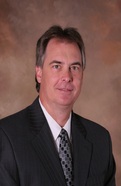
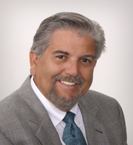
Prosperident investigator and speaker Dr. Pat Little, CFE


To book a fantastic speaker for your meeting, please call us at 888-398-2327 or send email to requests@dentalembezzlement.com
 
Read about us...
Are you working harder but earning less?  See this
 
See Dr. Mike DiTolla's interview with Prosperident CEO David Harris in Glidewell Labs' Chairside Magazine
 
Embezzlement -- it can happen in your practice DentistryIQ.com


IN THIS  NEWSLETTER
A picture of the famous Sydney Opera House taken by David Harris
 
David Harris in Australia!
Prosperident CEO David Harris recently returned from a trip to Australia where he conducted field work for an investigation, gave a presentation and was interviewed by his good friend Dr. David Moffet for the Australian Dental Association.  David said "What an amazing place!  Great people, spectacular scenery, fantastic food". 
 
The team’s perspective was a bit different: "We get David out of the office whenever we can so that the rest of us finally can get some work done".


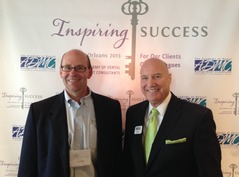
Here is David with Australian dentist and consultant Dr. David Moffet and Texas-based dental marketing guru Dr. Scott Peterson in Australia's beautiful Blue Mountains.
 
David Moffet's consulting web site is here, and Scott Peterson's is here.
A Note From Our CEO:


What Prosperident Does
 
We talk quite a bit about embezzlement and embezzlers in our newsletter, but have consciously tried not to talk about our work.  I've recently had several readers of our newsletter say more or less the same thing to me -- that we provide good information but need more discussion on our products and services.  So here goes ...

As I am sure all of you know, our core business is embezzlement investigation.  We do three kinds of investigation:
  • Exploratory -- this is where someone has no strong concerns about embezzlement, but wants the comfort of knowing that it isn't taking place in their practice.  We perform a series of tests on their practice to look at the most pervasive techniques used by embezzlers.  These investigations are done on a fixed-fee basis.  Fees vary according to the practice's situation, and start at $4,500.
  •  
  • Directed -- these are used when there are strong indications of embezzlement in a practice.  Methodology used is similar to an exploratory examination, but may involve a longer examination period and more procedures.  Pricing may be fixed-fee or hourly, depending on the situation.
  • Comprehensive -- these examinations are done when defalcation has already been identified at a practice.  Comprehensive examinations may involve testing extended time periods for embezzlement, and applying additional tests, as well as working with law enforcement agencies and assisting with loss recovery. Costs for comprehensive examinations are normally billed on an hourly basis.
We also perform other work that makes use of our investigative skills; for example, we are frequently called upon by purchasers who believe that some information about the practices they bought was misrepresented by the sellers, and we also are consulted on matrimonial disputes where a dental practice is involved.
While I completely understand that not everyone shares this perspective, our group of investigators find this work fascinating and attack it with enthusiasm.
If you have any questions about our work or whether we can assist in your situation, please feel free to call me at 888-398-2327.
Yours truly,


David Harris, CFE
Chief Executive Officer


Prosperident -- The world's largest dental investigation embezzlement firm

November 2013


Dental Embezzlement News
Issue #17 -- November 2013
Did you miss a previous newsletter?  We archive them here.
The Embezzlement Dudes Get Together!
 
 
No, This isn't a convention of bald guys.  It's Prosperident CEO David Harris with Dr. Don Lewis. 

In addition to maintaining a full-time oral surgery practice, Don is an active speaker on the topic of embezzlement and also the CEO of the company that developed some very interesting software called Practice SafeGuard.  

Practice SafeGuard is designed to work in the background and monitor transactions taking place in a dentist's practice management software, and to directly alert the dentist when it finds suspicious activity.  

You can learn more about Practice SafeGuard at practicesafeguard.com
 
Upcoming Presentations
 
Here are some of the places you can hear us speak soon:
 
American Association of Orthodontists Webinar Dec 4 and 10 2013 (AAO members only)
Arizona Orthodontists' Study Club Jan 13 2014
TopsOrtho Software Topsfest, Tucson, AZ Feb 1 2014
Thomas P. Hinman Dental Meeting, Atlanta GA Mar 27 2014
Star Of The North Meeting, St. Paul, MN Apr 24 2014
Western Regional Dental Convention, Phoenix AZ Apr 3-5 2014
Denver Profitable Dentists Study Club, Denver, CO May 8 2014
Pacific Coast Society of Orthodontists, Anaheim, CA Oct 5 2014
Southern Association of Orthodontists, Nassau, Bahamas Oct 11 2014
 
Wendy Askins, MBA, one of Prosperident's most experienced investigators


To book a fantastic speaker for your meeting, please call us at 888-398-2327 or send email to requests@dentalembezzlement.com
 
Our most requested presentation is called "How To Steal From A Dentist"
 
Read about us...
Are you working harder but earning less?  See this
 
Combatting Embezzlement -- What Works and What Doesn't Oral Health Office
 
Embezzlement -- it can happen in your practice DentistryIQ.com


IN THIS  NEWSLETTER


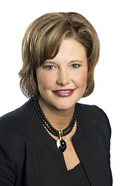
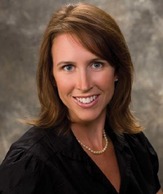
Learn more about Kristin at www.KristinPelletier.com
  Guest Column -- Kristin Pelletier
As you know, in the course of our work we are blessed to encounter some truly amazing consultants, and we like to use this portion of our newsletter to showcase some of them. 
 
This week's guest is someone we feel is an emerging star in the dental consulting world.
 
Kristin Pelletier is a dental practice management consultant whose comprehensive services bring success and transformation to clients with her results-driven consulting style.
 
We have known Kristin for several years and she continues to impress us with her knowledge and logical approach. 
Overcoming the Insurance-Driven Patient
Many dental practices tell me their number one obstacle to case acceptance is that their patients are insurance-driven. What exactly does this mean? When you’re presenting treatment to a patient, how often does the question “Will my insurance cover this?” come up in the conversation? And, when it does, are you prepared with an effective response, or do you simply take the patient to the insurance coordinator to get the answer?
 
While many practices think this focus on insurance is initiated by their patients, I believe most patients actually learn this behavior from the dental team. Patients absorb this message in your office every day by offhand questions such as: “How often does their insurance company allow full mouth x-rays?” Or, “Will their insurance company allow sealants?” Or, in the case of a restorative procedure, do you recommend that the patient spread the treatment over multiple benefit years to get the maximum coverage by insurance?
 
When patients hear us asking these questions, they think that treatment decisions are the responsibility of their insurance company. Instead, we should be communicating that our primary concern is our patients’ optimal oral health. I recommend that you have a team meeting and talk about what types of services your practice makes treatment recommendations based on insurance coverage. Then, consider these same services in terms of their impact on your patients’ oral health without regard for how much insurance will cover. What changes do you need to make in the language you’re using in your practice so your focus is on patient health not insurance payments?
 
Don’t just make these changes with bigger procedures. Make sure to incorporate this language in everything you do. Your patients will start to pick up on the message for the little things – the preventive and the diagnostic procedures – that this practice focuses on what we need and not what insurance allows. Then when something bigger comes up - like restorative procedures with a waiting period or a frequency limitation - your patients have already been sent a very clear message that your practice makes treatment recommendations based on what you need not what insurance allows.
 
When objections do come up, reply with a health-centered answer. Take them back to the consequences of leaving the condition untreated. One of my favorite responses is: “Insurance is designed to help you maintain a healthy mouth. If you need a restorative procedure or you need to go from disease to health, insurance only provides a minimal cushion to help. But, once your mouth is healthy, your insurance will help you keep it that way.” When the dentist can be the one to say this, it is so POWERFUL!
 
When you change this behavior in your practice, you’re on the way to training your patients to value what they need and not what insurance will pay for.
A Note From Our CEO:


The Cost of Inaction
 
Two years ago, I set a goal for Prosperident of increasing the knowledge level of dentists and those who advise dentists about embezzlement.
 
Overall I think we have done a good job of increasing awareness.  Prosperident's other speakers and I have given literally hundreds of presentations and have logged thousands of travel miles.  Our articles have appeared in every major dental publication in North America.  Google search the word "Prosperident" and you will see the extent of the information that we have put in front of the dental community.  
 
And yet, every once in a while, something happens that causes me to question our effectiveness at getting the word out.  Last week I had two encounters with dentists that caused me to question our effectiveness at getting the word out.
 
First, I got a call from a dentist.  As this dentist described his situation, it became clear that embezzlement was very likely happening given the suspect's behavior.  We were retained and began our intake process.  The dentist contacted us two days later to say that he was discontinuing the investigation, and the reason was that there was a labor shortage in the area of the practice.  In other words, that it was better to keep an employee who was stealing from the dentist than trying to find another one.  I couldn't believe my ears.
 
A few days later, I got a call from another dentist.  One of this dentist's staff had taken the scrap gold in the office, sold it, and kept the proceeds.  The question that this dentist was calling to ask me was whether the employee should be fired.  While the amount involved was fairly small, the answer to this question seemed so obvious to me that I'm still having trouble believing that it had to be asked.
 
What concerned me about both of these incidents is the apparent willingness of the dentists involved to tolerate some level of dishonesty on the part of an employee.
 
Let me make this simple -- there should be ZERO tolerance for dishonesty from your staff.  Someone who will sell a few hundred dollars of your gold is obviously over the ethical hurdle that employees must cross before they steal, so it is only a matter of time before this evolves into a more direct (and monetarily significant) form of stealing. And the dentist who suddenly decided that a local labor shortage existed had obviously bought into the idea than the suspect is completely indispensable to the practice.
 
The costs of inaction can included severe financial damage.  It also consigns the dentists to "long-term uncertainty" -- wondering what these employees are up to will continue for as long as they continue to work in these practices.
 
I hope that if you have suspicions or concerns, or if you have found embezzlement, that you respond quickly and appropriately.  Please feel free to email or call me if you want to discuss your situation. 
 

Yours truly,


David Harris, CFE
Chief Executive Officer


Prosperident -- The world's largest dental investigation embezzlement firm
888-398-2327

December 2013


Dental Embezzlement News
Issue #18 -- December 2013
Did you miss a previous newsletter?  We archive them here.
How Embezzlement is Found
 

When we speak to dentists, one thing that always surprises audiences is what gives embezzlers away.  Most dentists expect that the majority of thieves are caught due to some kind of financial irregularity.  However, a 2007 ADA survey of embezzlement victims revealed that this wasn't true.  In fact over 2/3 of embezzlement is caught based on some aspect of the thief's BEHAVIOR.  Most thieves employ several methodologies and, based on their knowledge of their dentist's habits, carefully plan their embezzlement to evade scrutiny. 

The plethora of financial controls and self-auditing that have been suggested to dentist for many years for controlling embezzlement have been spectacularly unsuccessful.  In part, this is because dentists lack the time and training to properly use these tools.  However, a bigger factor may be that this approach bypasses a dentist's best opportunity to spot embezzlement.

Most of you know about our Embezzlement Risk Assessment Questionnaire.  This questionnaire takes about 15 minutes to complete, and assists a dentist in identifying behavioral telltales of embezzlement.  The Questionnaire is scored, so that a dentist can receive immediate feedback about the embezzlement risk that he or she faces. 

We periodically fine-tune the Questionnaire based on what we see in the field.  In September, we made some significant improvements. 

If you are using an older version of the Questionnaire, or if you have never used it, please request the updated version by clicking here. Completing the Questionnaire might be the best 15 minutes you ever invest in your practice. And don't worry -- we promise not to scold you Laughing


We Love to Talk!
Want to dazzle an audience for your next speaking event? Bring in a Prosperident speaker!
 
Here's what someone who hired us as a speaker had to say recently:
 
"Having you here to present proved to be one of the most successful events we have ever hosted... Thanks again for an incredible seminar!"
 

Sincerely,
 
Ted
 
Theodore C .Schumann, CPA CFP
The DBS Companies, Bay City, MI
 
 
To book a speaker for your event, call us at 888-398-2327 or email requests@dentalembezzlement.com
IN THIS  NEWSLETTER
 
 
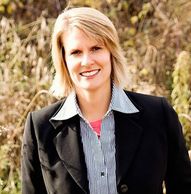
Learn more about Jennifer at www.virtualdentalofficemanager.com  You can reach her at (563) 582-4762.
 
Guest Column -- Jennifer Schultz
Jennifer is one of the most versatile consultants you can find.  She is a fusion of clinical and managerial knowledge.  She has been a hygienist, a software trainer, a certified HR expert, and has been involved in practice transitions.  Her true niche is in helping dentists manage their practice and their teams.  We value Jen in situations where an office faces multiple issues simultaneously and needs someone with her breadth of experience to work through them. In addition to her broad knowledge, her outgoing nature and earnest personality make it hard not to like her.  Let's hear what Jennifer has to say about understanding practice finances ...
There is a ministry for couples struggling with finances that I volunteer with.  Recently I met with a couple who lost their home to foreclosure and moved in with her parents.  They told me that they lost their home because they couldn’t afford their house payment.  The first step in working with a couple for financial mentoring is to have them list all of their expenses and write down everything they spend for one month.  After reviewing this couple’s information I noticed that they spent $875 on their son’s birthday party and gift.  When I asked them how much they thought they spent they answered “about $300”.  The mortgage of the home that they lost was $580 a month.  When I showed them the numbers, they realized that the mortgage really wasn’t too high for their income, but their spending was.  Having the data made it very clear to see what the root cause of their financial situation was from.  Without tracking their expenses they would not have understood so easily what the cause and solutions were.  Tracking the numbers facilitates data based decisions.  The alternative is decisions based on our emotions.  Our emotions fluctuate however, the numbers don’t lie.

Tracking practice statistics in a dental office is very important as well.  Without the numbers, practice decisions are often based on emotion or what happened in the last few days.  For example, Dr. Brown noticed that his collections have not been what they should be.   He remembered seeing a report last month that listed all the adjustments and was shocked by how much is written off due to his contracts with insurance companies.  Dr. Brown determined that the insurance write offs are the reason why his collections are low.  While this may be true, it is quite possible that there are other protocols affecting his low collections.  They could be any of the following:
·        Payment on day of service
·        Collection calls and letters
·        Insurance claim follow up
·        Case presentation
·        Case acceptance
·        Payment options for patients
·        Cancellations/no shows
·        Priority list

Without tracking and reviewing practice statistics it is difficult to understand the real reason(s) behind the successes and challenges in a practice.  Without understanding the root cause of a challenge, finding a solution will take considerably longer.  However when statistics are tracked it makes it easy to identify the needed changes, and when the new protocols are successful.  The next time you have a challenge in your practice, focus on what your practice statistics are identifying as the root cause.
 
A Note From Our CEO:
 
 
MY CHRISTMAS LIST... 
 
This is our last newsletter of 2013, and I want to thank those of you who have made a point of letting me know that you appreciate our newsletter.  I'm always pleased (and I'll confess, a bit surprised) at the frequency of comments like "yours is the one newsletter I actually take the time to read".
 
When we started our newsletter about a year and a half ago, I couldn't have imagined that readership would grow fivefold (I'm pleased to say that our readership now exceeds 10,000), and that, just like the TV show CSI, would spawn a number of spin-offs, as we now also have a newsletter specifically for consultants and others who advise dentists, and another designed for meeting planners and study club coordinators.
 
While I am pleased with the effect that this newsletter and our other outreach efforts are having on raising awareness of the embezzlement problem facing dentistry, embezzlement continues to victimize far too many dentists.  Published statistics suggest that the probability of a dentist being embezzled in his or her career is 60%, and that the average amount embezzled exceeds $100,000.  While these statistics should alarm and enrage every practicing dentist, they don't even tell the full story.  Embezzlement does far more than empty dentists' pockets; it terminates friendships, causes people to lose their jobs and pushes dentists into bankruptcy.  It has ended marriages.  It also destroys the ability for victims to trust the people around them.  I consider practicing dentistry to be a stressful environment anyway, and an inability to trust creates another layer of pressure on top of what is already there.  For some, this represents the breaking point.
 
So with that preamble, Santa, here is my list.  I have tried to be good all year.  I understand that I probably won't get everything I ask for, but I thought I should ask anyway:
 
1.  I'd like dentists to understand that it CAN happen to them.  A major enabling factor is that many dentists believe that there is something in their circumstances that makes them "embezzlement-proof".  Take it from me that there is no such thing.
2.  I wish that dentists would respond more decisively to symptoms.  Far too many dentists ignore glaring indications of embezzlement because they refuse to believe that their "extended family" of staff would ever steal. 
3.  I'd like to see the criminal justice system move WAY more quickly to deal with embezzlers. 
4.  Since my mom taught me not to be greedy and to also wish for things for others, on behalf of all of us at Prosperident, I wish that the rest of 2013 is safe, prosperous and enjoyable for all of you. 
 
 
Yours truly,


David Harris, CFE
Chief Executive Officer
Emergency Coverage Over Holidays
While our switchboard isn't staffed between Christmas and New Years' Day, our embezzlement hotline, emergency@dentalembezzlement.com is monitored daily 365 days per year. 


Prosperident -- The world's largest dental investigation embezzlement firm
888-398-2327

January 2014


Dental Embezzlement News
Issue #19 -- January 2014
Did you miss a previous newsletter?  We archive them here.
What an 11 Year-Old Can Teach Us About Embezzlement
____________________________
Editor's note:
It's really hard to pin CEO David Harris down to write a newsletter article.  He's OK with doing his monthly "Note from the CEO" column, but it's a challenge to get more than that from him.  So when he OFFERS to write an article, you are instantly intrigued.  Here it is:
____________________________
 
My son is about to turn twelve.  He's definitely a well-rounded kid -- he does well in school, excels in any sport he plays and can even emit something that resembles music from his saxophone.
 
But as mature as he is for his age, he still isn't an adult and sometimes this comes to light.  For example, occasionally he plays chess with me.  I haven't lost to him yet (although he did give me a scare once).
 
I don't win because I am smarter than he is; in fact I the reverse is probably true.  I defeat him because I have the wisdom and worldliness of an adult.  It is far easier for me to perceive and counter my opponent's strategy than it is for him, and this allows my winning streak to continue.
 
Now let's apply this concept to embezzlement.  In the battle against an embezzler, he or she has the upper hand.  They know you well and understand what you scrutinize (and what you don't).  They can pick the time and place to strike, and, like me playing chess, are quite capable of adapting to your efforts to block them.
 
Every month I get asked by dentists if some contemplated procedural change will reduce the chance that they will be embezzled.  The simple answer is "No". 
 
Assuming that blocking an embezzlement "pathway" ignores both the determination and adaptability of the thief; someone who has decided that they should steal from you will keep looking until they find an undefended corner of your practice, and these corners will always exist. 
 
There have been lots of articles written touting the effectiveness of these "denial of opportunity" strategies.  I can only surmise that the authors haven't met many criminals.
 
If there is one thing about embezzlement that I want you to assimilate, it's this -- in the "game" of embezzlement, don't ever forget that you are the 11 year-old and the embezzler is the adult.
 
 
I'm not suggesting that you are powerless against embezzlement; only that the conventional approach of "locking the barn door" is flawed.  However, if you know what you are looking for, embezzlement is easy to spot. 
 
Our Embezzlement Risk Assessment Questionnaire is a fantastic tool for this, and using it regularly is the single best method of controlling embezzlement.  If you don't have the questionnaire, or if yours is out of date, we will be happy to give you a free one if you just send an email here. In a future edition of our newsletter, I'll discuss how to use the questionnaire to maximum advantage. (Editor's note -- I'll believe it when I see it.)
 
David
 
We Love to Talk!
Here are some of the places you can hear us speak in the next quarter:
Jan 13 Arizona Orthodontists Study Club, Phoenix AZ
Jan 22 Halifax County Dental Society, Halifax NS
Feb 1 TopsFest, Tucson AZ
Mar 27 Thomas P Hinman Dental Meeting, Atlanta GA
Apr 3-5 Western Regional Dental Convention, Phoenix AZ
Apr 25 Star of the North Meeting, St. Paul MN

To book a great speaker for your meeting or study club, please send an email here  or call us at 888-398-2327.
 
Prosperident's Mission
 “We eliminate uncertainty for dentists with embezzlement concerns and maximize financial and emotional recovery for victims.”
 

IN THIS  NEWSLETTER
 
 
Learn more about Lisa at www.intentionaldental.com 
 
You can reach her at 517-331-3688
 
Guest Column -- Dr. Lisa Knowles
Lisa Knowles is known as "Dentistry's Communications Expert".  After fifteen years of practice ownership, Lisa has scaled back her clinical activities to concentrate on consulting.  Her focus is on helping the dental community create messages that evoke change and unify teams, and Lisa has a particular interest in the topic of oral and systemic links emerging in dentistry. She is leading the way in creating awareness and in creating collaborative messages to help all healthcare providers speak a common language to facilitate better patient care. 
 
Lisa and Prosperident CEO David Harris have been friends for several years and regularly have interesting discussions on topics of mutual interest.  The following piece from Lisa is an offshoot of one of those discussions.
New Year, New Hope
 
The topic of embezzlement is heavy. Let’s admit it. It’s scary, not real fun to think about, and brings up all sorts of emotional upheaval within us. Personally, I am elated David Harris covers this topic and takes care of it for dentists. I would not want to do it.
 
After many conversations with David, it’s clear I am the antithesis to the heaviness of embezzlement. David refers to me at the Don Quixote of dental consulting. At first, I worried about this. Maybe I am too soft? Maybe I am too pie in the sky? Maybe I am too…hopeful?
 
I think not. If there’s one thing people want in a dental consultant, it’s an ability to give them hope for something better. People turn to consultants under a couple of circumstances: 1) They want to change some things in their lives, and they want to get better or 2) They are really good at what they do, but they want to be even better. Both situations require hope.
 
I chide David about being too skeptical, and he chides me about chanting “om’s” in my yoga classes. Really, though, to succeed in dentistry, we need to be both skeptical and idealistic. The hard part: knowing when to turn one on and the other one off. If we are too skeptical, the world becomes negative and hard to live in. If we are too idealistic, life becomes fantastical and unrealistic.
 
For the embezzlement arena, I want to hire someone who is a bit cynical. This person must not trust easily and must question each “suspect” with the utmost objectivity. David and his team have this knack.
 
For the team left broken after an embezzlement situation, I offer the hope and reassurance that life will resume as normal again in due time. My forte in communication offers practices the language needed to get through the process, and my experience as a dentist helps other dentists learn to trust again.
 
No one likes to be duped. No one likes to play the fool. Embezzlement brings out all of these feelings and all of these possibilities. It’s good to know everyone has been duped and everyone has played the fool at some time in his or her life. Good consultants help the team find pieces of good in the world again and help breathe new life back into difficult situations. Good consultants hold the hope for the team when no one seems to have any of their own.
 
As the New Year begins, I challenge you to find the right balance between skepticism and idealism. For me, it’s an intentional effort to not live in a sea of cynicism day in and day out—even though there are thousands of reasons to lack faith in others. Rather, it’s a conscious choice to find the good in a bad situation. It’s a conscious effort to find others who, through the good, the bad, and the ugly, remain optimistic about life. People like David and I need each other. I need the Davids in my life to remind me to be cautious and to look before I leap. David needs the Lisas to remind him that not everyone is fraudulent, and there are trusted souls still out there in the world. We need both skepticism and idealism in dentistry, just not in their extremes
It’s with hope that I wish you a peaceful and prosperous 2014!
 
Lisa Knowles


A Note From Our CEO:
 
 
Welcome to 2014! 
 
Whether you celebrate Christmas or not, for many of us the last part of December represents a time when things slow down a bit and you get to spend time with family, eat too much and spend a bit of time contemplating life. 
 
December 2013 also seemed to have some of the wildest weather on record in the United States and Canada, but that's a whole other story...
 
For some reason the slowdown seemed to completely bypass Prosperident; we received a record number of requests for assistance from dentists in December.  I'm not complaining, but I do want to publicly say thanks to our dedicated staff, who were fielding enquiries and working with clients throughout the holidays.
 
I'm excited about 2014.  We've made some major investments in technology in 2013, including some significant upgrades to the computers in our Data Analysis Lab in December.  These upgrades will generally be invisible to you but will give our investigators the tools to make speedier investigations and communicate results more quickly to dentists.  We've also got some terrific speaking engagements lined up.  Those of you who know me also know how much I enjoy being able to meet and connect face-to-face with a group of dentists, and this feeling is definitely one that our other investigator/ speakers share.
 
I'm thrilled to have a guest column this month from my friend Dr. Lisa Knowles.  I can think of few people with whom I have less in common, but yet enjoy such a good friendship with.  Her perspective is a great one, and I'd invite you to check out her web site.
 
I hope that you had a good holiday, that if you are in the Midwest, that your pipes aren't frozen this morning, and that you are excited about the challenges and opportunities facing you in 2014. 
 
I
Yours truly,


David Harris, MBA CMA CFE
Chief Executive Officer


Prosperident -- The world's largest dental investigation embezzlement firm
888-398-2327
© 2026 - Prosperident
Book a Consultation