Prosperident Pulse Archive — August 2014 to January 2015

Home > Media > Prosperident Pulse Newsletters > Prosperident Pulse Archive — August 2014 to January 2015

This archive collects five issues of the Prosperident Pulse newsletter from August 2014 through January 2015. Use the table of contents below to jump to any issue.

Issues in this archive


August 2014


Dental Embezzlement News
Issue #26 -- August 2014
Did you miss a previous newsletter?  We archive them here.
Upcoming Speaking Engagements
Here are some of the places you can hear us speak in the next few months:
Sep 5 Patterson Dental, Biloxi MS
Sep 11
Island Pursuit of Dental Excellence, Nanaimo BC
Sep 19 Santa Monica Oral and Maxillofacial Study Club, Santa Monica CA
Sep 21 New Jersey Health Professionals Development Institute, River Edge NJ
Sep 25 Annapolis Valley Dental Society, Kentville NS
Oct 5 Pacific Coast Society of Orthodontists, Anaheim CA
Oct 11 Southern Association of Orthodontists, Nassau Bahamas
Nov 15 Dalhousie University, Halifax NS
Nov 18 Patterson Dental, Miami FL
Nov 19 Patterson Dental, Fort Lauderdale, FL
Nov 20 Patterson Dental, Stuart, FL
Dec 3 American Association of Orthodontists webinar (AAO members only)
Dec 4 Paragon Management, Washington DC
Dec 6 ITI Study Club, Kennesaw GA
Dec 9 American Association of Orthodontists webinar (AAO members only)
2015
Jan 29
topsFest, Atlanta GA
Feb 12 American Academy of Dental Group Practice, Las Vegas NV
Feb 20 Ortho2 User Group Meeting, Scottsdale AZ
Mar 5 Pacific Dental Conference, Vancouver, BC
Apr 9 New Orleans Dental Conference
Apr 14 Fox River Dental Society, Geneva, IL
May 8 American Association of Endodontists, Seattle WA
Sept 11 Northeastern Society of Orthodontists, Providence RI
Nov 5 ADA Annual Meeting, Washington DC
 
 
To book a great speaker for your meeting or study club, please send an email here  or call us at 888-398-2327.
 
Prosperident's Mission
 “We eliminate uncertainty for dentists with embezzlement concerns and maximize financial and emotional recovery for victims.”


Check out our web store
You can find our web store at www.dentalembezzlement.com/store.
 
The boss has spoken.  He wanted us to give a good discount on our powerful Embezzlement Risk Assessment Questionnaire.
 
If you use offer code ITSALMOSTFREE when ordering, we will reduce the price from the usual $79 to just $35.
 
 
When Dentists Behave Badly
 
Editor's note --Most of you know about our CEO, David Harris.  What you may not know is that, while he can talk about his son's soccer prowess all day, it is sometimes difficult to get him to write something for our monthly newsletter.  So when he offers to write an article, you just know that he has something important to say.
Do Dentists Embezzle?
By David Harris

I think everyone reading this newsletter is aware of the shockingly high probability of a dentist being embezzled in his or her career.  Published statistics put that probability at 60%, but because some embezzlement goes unreported and some is never detected, the true probability is likely about 80%.
 
It is tempting to attribute this pandemic to the necessity to have employees, with those employees being generally less educated and having a less developed sense of ethics than the dentist.  By this logic, while it is quite possible to be victimized by staff, it is unimaginable that another member of the dental fraternity would steal.
 
This reasoning is doubly flawed.  First, the overwhelming majority of dental team members share the altruism and integrity that most dentists bring to their profession, and the embezzlement statistics are a result of the actions of a very small proportion of dental staff.  And second, one dentist stealing from another in a group practice context is something that we encounter with some regularity.  We usually have four or five active investigations of this type in progress.  While this is a small proportion of our total investigations, we need to bear in mind that the number of multi-dentist practices where this "fratricide" can happen is relatively small also.
 
What I want to establish is that the causes of embezzlement are not as simple as modest economic circumstances and underdeveloped ethics.  Most of our dentist-embezzlers are already reasonably well off, and it is clear to me that they understand the ethical transgressions they are making.
 
So why do they do it? 
 
Sometimes the embezzlers feel that the dentist they are victimizing has somehow wronged them in the past, and they are (using a very twisted concept of fairness) attempting to right this historical wrong.  In other situations, I believe they get some kind of biochemical thrill from successfully stealing (analogous, I guess, to the celebrity shoplifters we sometimes read about in the news who steal a $10 item from a store while earning millions of dollars).  And the dental education and licensing process is probably far better at weeding out the undexterous and unintelligent than the sociopaths.
 
If you are not in a group practice, at this point you are probably questioning the relevance of this discussion to you.  It's actually pretty direct.  Embezzlers who happen to be dentists are bestowed a huge advantage by their victims.  Because their actions are "inconceivable" (and I'm now quoting many of the victims), the perpetrator receives far less skepticism from the victim than he or she should. 
 
Regardless of your practice situation, an easy way to make yourself vulnerable is to decide that it is inconceivable that a certain person will steal from you.  We have unfortunately seen far too many of these "inconceivables".  In addition to the classic cases of the trusted long-term employee we have also seen embezzlement committed by siblings of the dentist, children, and even spouses.
 
I'm not suggesting an ongoing hunt for embezzlers the way Sen. McCarthy once hunted for communists; simply that deciding that anyone is "above suspicion" is exactly the enabler that they need, if they are so inclined.  We just can't completely rule out the possibility of someone being a thief.  Whether you practice solo or in a group, some amount of skepticism is a healthy thing.
 
Our Embezzlement Risk Assessment Questionnaire is an excellent tool for flagging the telltale behavioral clues of embezzlement.  You can get it from our web store at www.dentalembezzlement.com/store.
A Note From Our CEO:
 
I
 
 
I remember how, as a child, I used to despise those "Back to School" flyers and ads.  School and I had a relationship that fell far short of harmonious.  I encountered one of my former high-school teachers a few years ago and he recalled trying to teach me history and that "it was painful for us both".  And even now, more than three decades after I slunk away from high school (and after having found success both as a student and professor in university), I still feel a slight anxiety when I see those ads.
 
For many of us grownups, "Back to School" also signifies "Back to Business".  While like almost everyone I will mourn the all-to-rapid passage of another summer, I'm excited about what is coming up for us this fall and winter.  Our fantastic team of investigators continues to grow both in number and capabilities, and as you can see from the left column of this newsletter, we have some wonderful speaking engagements coming up. 
 
If you haven't done so in a while as your own attention refocuses, I'd encourage you to pull out our Embezzlement Risk Questionnaire and complete it again.  If you don't have the Questionnaire, you can get it within a couple of minutes from our web store, and I've asked our Customer Service folks to offer a generous discount this month.
 
I hope you have had a great summer, and I look forward to running into many of you sometime over the Fall or Winter as I travel around our wonderful continent.
 
S
 
S


David Harris, MBA CMA CFE
Chief Executive Officer


Prosperident -- The world's largest dental investigation embezzlement firm
888-398-2327

September 2014


Dental Embezzlement News
Issue #27 -- September 2014
Did you miss a previous newsletter?  We archive them here.
Hear Us Speak!
Here are some of the upcoming venues where we will be speaking:
Sep 21 New Jersey Health Professionals Development Institute, River Edge NJ
Sep 25 Annapolis Valley Dental Society, Kentville NS
Oct 5 Pacific Coast Society of Orthodontists, Anaheim CA
Oct 11 Southern Association of Orthodontists, Nassau Bahamas
Nov 15 Dalhousie University, Halifax NS
Nov 18 Patterson Dental, Miami FL
Nov 19 Patterson Dental, Fort Lauderdale, FL
Nov 20 Patterson Dental, Stuart, FL
Dec 3 American Association of Orthodontists webinar (AAO members only)
Dec 4 Paragon Management, Washington DC
Dec 6 ITI Study Club, Kennesaw GA
Dec 9 American Association of Orthodontists webinar (AAO members only)
2015
Jan 25 Carestream Oral Surgery Summit, Atlanta, GA
Jan 29
topsFest, Atlanta GA
Feb 12 American Academy of Dental Group Practice, Las Vegas NV
Feb 20 Ortho2 User Group Meeting, Scottsdale AZ
Mar 5 Pacific Dental Conference, Vancouver, BC
Apr 9 New Orleans Dental Conference, New Orleans, LA
Apr 14 Fox River Dental Society, Geneva, IL
May 8 American Association of Endodontists, Seattle WA
Sept 11 Northeastern Society of Orthodontists, Providence RI
Nov 5 ADA Annual Meeting, Washington DC
 
To book a great speaker for your meeting or study club, please send an email here  or call us at 888-398-2327.
 
Prosperident's Mission
 “We eliminate uncertainty for dentists with embezzlement concerns and maximize financial and emotional recovery for victims.”


Check out our web store
You can find our web store at www.dentalembezzlement.com/store.
 
Attention Orthodontists:
Our newest "how to" package is designed specifically for orthodontists, and is called "How to Beat Embezzlement in Your Orthodontic Practice". This package contains a useful monthly monitoring spreadsheet, and our popular Embezzlement Risk Assessment Questionnaire.
 
As an introductory special, the first 100 orthodontists using the offer code PROSPERIDENTLOVESORTHO will get a 35% discount off the retail price.
 
You can order the package here
 
This offer will sell out quickly, so please act soon to ensure that you don't lose out.
 
 
dentists making a difference for cancer patients


Don't Shoot the Messenger
David Harris co-wrote this article several years ago with his friend, Dental Consultant Lorraine Guth, in a great magazine called The Progressive Dentist.  It's a great discussion about embezzlement and the dilemma that Lorraine faced.
 
Lorraine's web site is www.motivationsbymouth.com
 

Lorraine Guth…
If you suspected your friend’s spouse of cheating, would you tell?  What if the signs of the deceit were fairly clear, but you couldn’t be sure? It’s a tough question, and most of us really don’t know how we would respond until actually faced with the decision.  As consultants, one of our most difficult challenges is bringing evidence forward when we believe a dentist-client is the victim of fraud.
 
Follow me as I recount an experience. It was the end of the first day of observation and coaching in Dr. Simpson’s practice.  I watched and learned from the doctor and team members.  Something didn’t seem right.  I began my mental organization of findings and started to dig deeper. Dr. Simpson’s favorite and most dedicated employee seemed to be holding back.
 
 
By David Harris MBA CMA CFE and Pat Little DDS FAGD CFE
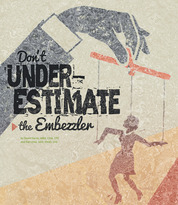
As investigators, one thing we encounter every time we speak to a group of dentists is that, in the area of embezzlement, they consistently underestimate the capabilities of their opponents.

The most common question asked of us is, “Will this control/procedure/auditing step work?” followed by some procedural change that the questioner intends to implement. Normally, this change is designed to block a specific embezzlement methodology.

For example, one question recently asked in a presentation was whether using a “lockbox” system, where all mail gets delivered to a third party (which then opens the mail and inventories the contents), would prevent embezzlement.

This question is an example of denial of opportunity strategies for controlling embezzlement, because its goal is to block a specific embezzlement pathway.

While we don’t think that strategies of this type are necessarily bad ideas, we do believe that their effectiveness in controlling embezzlement is overestimated.
 
investigators, one thing we encounter every time we speak to a group of dentists is that, in the area of embezzlement, they consistently underestimate the capabilities of their opponents.

The most common question asked of us is, “Will this control/procedure/auditing step work?” followed by some procedural change that the questioner intends to implement. Normally, this change is designed to block a specific embezzlement methodology.

For example, one question recently asked in a presentation was whether using a “lockbox” system, where all mail gets delivered to a third party (which then opens the mail and inventories the contents), would prevent embezzlement.

This question is an example of denial of opportunity strategies for controlling embezzlement, because its goal is to block a specific embezzlement pathway.

While we don’t think that strategies of this type are necessarily bad ideas, we do believe that their effectiveness in controlling embezzlement is overestimated. - See more at: http://www.dentaltown.com/MessageBoard/thread.aspx?s=2&f=2669&t=230412#sthash.PxqHQmV7.dpuf
As investigators, one thing we encounter every time we speak to a group of dentists is that, in the area of embezzlement, they consistently underestimate the capabilities of their opponents.

The most common question asked of us is, “Will this control/procedure/auditing step work?” followed by some procedural change that the questioner intends to implement. Normally, this change is designed to block a specific embezzlement methodology.

For example, one question recently asked in a presentation was whether using a “lockbox” system, where all mail gets delivered to a third party (which then opens the mail and inventories the contents), would prevent embezzlement.

This question is an example of denial of opportunity strategies for controlling embezzlement, because its goal is to block a specific embezzlement pathway.

While we don’t think that strategies of this type are necessarily bad ideas, we do believe that their effectiveness in controlling embezzlement is overestimated. - See more at: http://www.dentaltown.com/MessageBoard/thread.aspx?s=2&f=2669&t=230412#sthash.PxqHQmV7.dpuf
A Note From Our CEO:
 
 
In July, we had the pleasure of hosting Prosperident's senior investigative team at our head office in Halifax, Canada.  Our examiners live all over North America, and since we are a "Company of the Cloud", we don't often get to see each other face to face.  In fact, while they communicate by Skype and email, many of our senior people hadn't actually met each other.
 
So we had a couple of intense days working on improving our techniques and revising some of our processes. The meeting's focus was on increasing the turnaround time for our embezzlement examinations. 
 
We had some fun too, of course, and managed to fit in some sea kayaking, touring the local area and a barbeque at my house.  While our group's backgrounds are diverse, it amazed me how well they interacted as a group and how quickly they brought out the best in each other.
 
It's hard not to be struck by the intellect, resourcefulness and dedication of this group.  Prosperident, and the dental community, are fortunate to have their expertise.


David Harris, MBA CMA CFE
Chief Executive Officer


Prosperident -- The world's largest dental investigation embezzlement firm
888-398-2327

October 2014


Dental Embezzlement News
Issue #28 -- October 2014
Did you miss a previous newsletter?  We archive them here.
We Love to Talk!
Here are some of the places you can hear us speak:
 
Oct 11
Southern Association of Orthodontists, Nassau Bahamas
Nov 15
Dalhousie University, Halifax NS
Nov 18
Patterson Dental, Miami FL
Nov 19
Patterson Dental, Fort Lauderdale, FL
Nov 20
Patterson Dental, Stuart, FL
Dec 3
American Association of Orthodontists webinar (AAO members only)
Dec 4
Paragon Management, Washington DC
Dec 6
ITI Study Club, Kennesaw GA
Dec 9
American Association of Orthodontists webinar (AAO members only)
2015

Jan 25
Carestream Oral Surgery Summit, Atlanta, GA
Jan 29
topsFest, Atlanta GA
Feb 12
American Academy of Dental Group Practice, Las Vegas NV
Feb 20
Ortho2 User Group Meeting, Scottsdale AZ
Mar 5
Pacific Dental Conference, Vancouver, BC
Apr 9
New Orleans Dental Conference, New Orleans, LA
Apr 14
Fox River Dental Society, Geneva, IL
May 8
American Association of Endodontists, Seattle WA
Sept 11
Northeastern Society of Orthodontists, Providence RI
Nov 5
ADA Annual Meeting, Washington DC
 
To book a great speaker for your meeting or study club, please send an email here  or call us at 888-398-2327.
 
Double Certified?
 
Our CEO David Harris, who already holds the Certified Fraud Examiner designation, just received notification from the American Association of Certified Public Accountants that he has been awarded the AICPA’s Certified In Financial Forensics (CFF) designation. Now we just have to figure out how to fit all of his post-nominals on his business cards.

Prosperident's Mission
 “We eliminate uncertainty for dentists with embezzlement concerns and maximize financial and emotional recovery for victims.”


Check out our web store
You can find our web store at www.dentalembezzlement.com/store.

We've recently made extensive updates to our popular How to Beat Embezzlement in Your Practice guide.
 
This guide is based on the knowledge we have acquired in investigating hundreds of dental embezzlement matters each year and is chock-full of simple, practical steps that you can take to thwart embezzlers in your practice.
 
Until October 31, we are pleased to offer this guide for 30% off the regular price.  Just use offer code FALLSPECIAL when ordering.
 
If you have previously purchased this guide, or if you are a current or former Prosperident investigation client, just email us here and we will be happy to send you one for free.


How Thriving Dentists Can Avoid Becoming a Victim of Embezzlement -- Gary Takacs interviews David Harris
 
Gary Takacs is definitely one of the brightest lights in dentistry today.  He is a coach, in-demand speaker, and the CEO of the Takacs Learning Center.
 
Gary's "Thriving Dentist Show" series of interviews is one of the best sources anywhere for dental knowledge, and he is certainly one of the best interviewers around.  Go here to listen to Gary interview David. 
 
Our most popular article ever -- What I Learned About Embezzlement by Playing Chess With My Son


While this isn’t the way that most articles about dental office embezzlement start, playing chess with my son taught me something important about embezzlement.
 
For his age, he is a decent player. He has a well-developed sense of strategy, which allows him to routinely defeat his peers. However, he has never beaten me (although I confess that he came close once last summer). My perfect record isn’t because I am smarter than he is (objectively, the reverse is probably true) or because his strategies are deficient. I attribute my success to having the perspective and wisdom of an adult, which allows me to study his moves and discern (and counter) his strategy.
 
 
A Note From Our CEO:
 
I
The Myth Of Prevention
 
I continue to see articles published with titles like "Four Things You Can Do To Stop Embezzlement In Your Practice" -- in fact I saw a new one online a couple of weeks ago. 

Many of these articles are written by someone working in the dental field but without the daily contact with embezzlement that we have.  So they write from "intuition" and recapitulate what others have written.  While these authors have the very best of intentions, they consistently make a couple of errors.
 
First, they assume that what controls other types of crime will also work for embezzlement.  So people fall into what we refer to as the "hard target fallacy" where they assume that if we make it hard for a prospective thief to steal, they won't try.  This works really well, for example in deterring house burglars, because an alarm (or even the sticker that says that you have an alarm) is normally all that is needed is to convince a burglar to rob someone else instead of you. However, embezzlement is different; unlike most economic crime where the thief is able to choose his or her victim, for embezzlers the victim is pre-ordained -- it's the doctor.   So the notion that we can redirect an embezzler to an alternate victim is misguided.
 
Second, many pundits underestimate the motivation and creativity of embezzlers.  People embezzle to address a perceived need; sometimes it is financial, and other times it is an emotional need that causes them to steal. 
 
In either case, it is a powerful motivation, and we shouldn't expect a few minor obstacles to steer an embezzler toward honesty.  And as for creativity -- we have been at this for over 25 years and have seen hundreds of embezzlement methodologies employed, and we still encounter new ones on a regular basis.  So picture your dental practice has having hundreds of embezzlement "doors".  Thinking that locking four (or ten or fifty) of them will solve your embezzlement problem unfortunately is wishful thinking.
 
I'm not suggesting that there is nothing that you can do; on the contrary, there are plenty of steps that you can take that will make embezzlement easier to spot, minimize its damage and facilitate the investigative process.  Our How to Beat Embezzlement in Your Practice guide offered through our web store gives you some simple and practical tools to gain the upper hand on those who might steal from you.
 
If you do have embezzlement concerns in your office, please feel free to reach out to us and we will be happy to help.
 
S
 
S


David Harris, MBA CMA CFE CFF
Chief Executive Officer


Prosperident -- The world's largest dental investigation embezzlement firm
888-398-2327

November 2014


Dental Embezzlement News
Issue #29 -- November 2014
Did you miss a previous newsletter?  We archive them here.
We Love to Talk!
Here are some of the places you can hear us speak:
 
Nov 15
Dalhousie University, Halifax NS
Nov 18
Patterson Dental, Miami FL
Nov 19
Patterson Dental, Fort Lauderdale FL
Nov 20
Patterson Dental, Stuart FL
Nov 20 Grand Strand Dental Society, Charleston SC
Dec 3
American Association of Orthodontists webinar (AAO members only)
Dec 4
Paragon Management, Washington DC
Dec 6
ITI Study Club, Kennesaw GA
Dec 9
American Association of Orthodontists webinar (AAO members only)
2015

Jan 24-25
Carestream Oral Surgery Summit, Atlanta GA
Jan 29
topsFest, Atlanta GA
Feb 12
American Academy of Dental Group Practice, Las Vegas NV
Feb 19
Ortho2 User Group Meeting, Scottsdale AZ
Mar 5
Pacific Dental Conference, Vancouver BC
Mar 6 Cloud9Ortho Users Meeting, Atlanta GA
Apr 9
New Orleans Dental Conference, New Orleans LA
Apr 14
Fox River Dental Society, Geneva, IL
May 8
American Association of Endodontists, Seattle WA
Jul 31 Arkansas Association of Orthodontists, Little Rock AR
Sept 11
Northeastern Society of Orthodontists, Providence RI
Nov 5
ADA Annual Meeting, Washington DC
Nov 10 Limestone City Study Club, Kingston ON
Nov 24 Lexington Oral Surgery Study Group, Lexington KY
 
To book a great speaker for your meeting or study club, please send an email here  or call us at 888-398-2327.
 
Prosperident's Mission
 “We eliminate uncertainty for dentists with embezzlement concerns and maximize financial and emotional recovery for victims.”


Check out our web store
You can find our web store at www.dentalembezzlement.com/store.

Our most-requested document is our Embezzlement Risk Assessment Questionnaire.  
 
The Questionnaire is designed to allow a dentist to determine the likelihood that he or she is being embezzled, in 20 minutes or less.
 
Until November 30, we are pleased to offer this guide for 25% off the regular price of $79.  Just use offer code THANKSGIVING when ordering.
 
If you have previously purchased this guide, or if you are a current or former Prosperident investigation client, just email us here and we will be happy to send you one for free.
 
 
What Not To Do If You Suspect You Have Been Embezzled
by Pat Little DDS FAGD CFE

From the Summer 2014 edition of The Progressive Dentist
 
As dentists, we have invested enormous time and resources obtaining our education, growing our practices and pursuing other professional endeavors. Additionally, we invest heavily in training and developing our dental team to assist us in achieving our professional and financial goals. Sadly, over the course of our careers, there is a three in five chance that one or more of our trusted team members will commit embezzlement.
This is a violation of our trust and can be emotionally and financially devastating. Some of you have already been embezzled in the past and know all too well the consequences that result from this crime. Embezzlement also impacts the rest of your team, and they often are afraid you will no longer trust them, which can have a significant impact on team morale. Additionally, you will be required to hire, train, and build trust with a new team member. Therefore, it is imperative that you learn to recognize the early warning signs of embezzlement in order to minimize its impact. It is also paramount that you respond correctly if you suspect someone on your team may be committing embezzlement.
 
 
Introducing Jonathan VanHorn
 
Jonathan VanHorn is certainly an interesting guy.  He is a CPA, but has moved beyond the traditional CPA bailiwick of "historical" work like P&Ls and income tax filing.
 
Jonathan has founded a company called Dentistmetrics and now uses his considerable financial knowledge to help dentists improve their financial outcomes.  The following is an article that he wrote for our newsletter.  Welcome, Jonathan!
 
 
The Fifteen Numbers that Will Make (or Break) Your Dental Practice.
I finished a goal setting session with a client this morning, and as we were wrapping up my client said to me, "If I'd set these plans in motion five years ago, I'd be taking home nearly $15,000 more a month right now.  If only I had known what I didn’t know."
Many dentists know that "stats", “benchmarks”, and "KPIs" exist, but don't know where to start looking for improvements.  
 
This article covers three of the most important numbers I've compiled through my time as a dental coach and dental CPA.  These numbers should give you a starting point for your practice.  I’ve looked at a lot of dental practices and the practices that have mastered these numbers are typically the most successful in terms of profit. 
I do want to emphasize that averages apply to everyone but no one at the same time. What does this mean?  It means don’t immediately get upset over your performance if you look at these stats and are underperforming.  It also means that just because you meet these three numbers, you aren’t guaranteed to be maximizing your potential.
 
The Three KEY Numbers for any Dental Practice
But wait, the title is “Fifteen” not “Three”! What gives? I’m only able to share three of these numbers in this article, BUT, if you’d like to see a free report with more than fifteen of these same statistics, including a mini-guide with precise information on how to really get value out of tracking your performance, visit http://dentistmetrics.com/prosperident for a copy of the full report.
 
#1 - Wages and Salaries including payroll taxes benefits (not including associates, or owner’s expenses)
Goal: 25% of net productions.  If you have stable and consistent earnings, you can use collections, but net productions are a better indicator overall.
Subgoal: Of the 25% compared to net productions, around 1/3rd should be hygiene. (around 8% to net productions)  That leaves 17% for the office manager, the front desk, and dental assistants.
Subgoal: For every $35,000 in monthly collections, you have one front office staff.
Where you should look if you don't meet the standard:
  • Are you overstaffed?
  • Are you overpaying your employees?
  • Is this a production problem?
#2 - Dental Supplies
Big Picture Goal: 5% of net productions.
This can vary a bit depending on the services you offer.  But 5% is where you should set your sights.
If you need help on lowering your supply costs, I wrote a set of posts covering this exact topic which you can find here: How to lower your dental supply costs.
 
#3 - Hygiene Rule of Three:
·        Hygiene should equal 1/3rd the production for the practice.
·        Hygiene should be compensated at 1/3rd production.
·        Less than 3 hours a week unscheduled/cancelled hygiene scheduled per hygienist. (also called open hygiene)
If you don't meet the standard:
  • What is your average daily production for each hygienist?
  • What is the average production per patient seen from each hygienist?
  • What is your recall efficiency? (How many hygiene patients reschedule?)
To recap:
The three base numbers every practice should keep track of are the three big picture stats here.  If you keep these numbers in line, you will have the basis for a fantastic practice.  However, this isn't the end all be-all of every practice.
If you want more stats, such as:
  • The baseline goal per day for each hygienist.
  • The goal for each hygienist's service.
  • How many new patients a day you need to aim for.
And more than 13 other KPI's for dental practices, along with a step by step guide of how to look at these numbers check out http://dentistmetrics.com/prosperident for a full report.
 
 
A Note From Our CEO:
 
I
Embezzlement, Baby Boomers and The Culture of Entitlement
 
I recently attended a presentation about the different ways that Baby Boomers, Gen Xs and Gen Ys make buying decisions. One of the points made by the speaker is that we are currently raising a generation of kids who never get to "lose" (when we now give medals to kids for participating instead of winning) and who, even as they enter adulthood, still have their parents fighting their battles for them (for an interesting read on this, check out this Huffington Post article). 
 
One generational change that the presenter discussed was that now most parents repeatedly tell their children that they are "special" (whereas when I was growing up in the 1960's, parents used the word "special" in an almost derogatory way -- as in "What do you think you are, special or something?").
 
Part of my interest in these changes relates to my role as parent of a 12-year-old son (who is frequently told that he is special), but I am also interested in anything that explains any part of the explosion in dental office embezzlement we have seen over the past two decades. 
 
There has clearly been a seismic shift in the environment in which we raise our kids.  Since it is we adults who create the framework in which our offspring develop, I have to conclude that changed parenting mirrors a change in our values and is not an adaptation to newborns behaving differently from birth.
 
I am certainly not advocating a return to the "Mad Men" 1960's when kids sat on smoking parents' laps in the front seat of cars and bullying was almost encouraged; I'm simply considering changes in societal values and their potential effect on embezzlement.

I've said before that our embezzlers fall into two categories, "Needy" and "Greedy", with Needy thieves pushed by financial need and the Greedy stealing for emotional reasons.  One observation I have often made about Greedy thieves is that they feel that they have underachieved in life and that they "deserve" certain things that their incomes don't permit.  I am sure that I am not the only one who sees the parallel between the concept that "everyone should be considered a winner, regardless of effort and ability" and "life hasn't rewarded me the way that it should, and therefore I am justified in correcting this societal oversight by stealing".
 
So what I realized from the lecture I attended is that probably Baby Boomers and Gen Xs worldview makes some of them feel more "entitled" to embezzle than perhaps their parents felt.  This entitlement would certainly explain some part of why embezzlement in dentistry has been such a growth industry.
 
Thanks, as always, for reading.
S
 
S


David Harris, MBA CMA CFE CFF
Chief Executive Officer


Prosperident -- The world's largest dental investigation embezzlement firm
888-398-2327

January 2015


Dental Embezzlement News
Issue #30 -- January 2015
Did you miss a previous newsletter?  We archive them here.
See Us Live!
Here are some of the places you can hear us speak:
 
Jan 24-25
Carestream Oral Surgery Summit, Atlanta GA
Jan 29
topsFest, Atlanta GA
Feb 12
American Academy of Dental Group Practice, Las Vegas NV
Feb 15 Hurley and Volk Orthodontics Schaumberg IL
Feb 19
Ortho2 User Group Meeting, Scottsdale AZ
Mar 5
Pacific Dental Conference, Vancouver BC
Mar 6 Cloud9Ortho Users Meeting, Atlanta GA
Apr 9
New Orleans Dental Conference, New Orleans LA
Apr 14
Fox River Dental Society, Geneva, IL
May 8
American Association of Endodontists, Seattle WA
Jul 17 Patterson Dental, Nashville TN
Jul 31 Arkansas Association of Orthodontists, Little Rock AR
Sept 11
Northeastern Society of Orthodontists, Providence RI
Nov 5
ADA Annual Meeting, Washington DC
Nov 6 Dr. Bruce Fraser Study Club, Columbus OH
Nov 10 Limestone City Study Club, Kingston ON
Nov 13 Academy for Orthodontic Excellence, Newport Beach, CA
Nov 24 Lexington Oral Surgery Study Group, Lexington KY
 
To book a great speaker for your meeting or study club, please send an email here  or call us at 888-398-2327.
 
Prosperident's Mission
 “We eliminate uncertainty for dentists with embezzlement concerns and maximize financial and emotional recovery for victims.”


Our new financing partner
 
We are pleased to announce we have been approved by award-winning financial services company The Business Backer to offer affordable financing for our investigative services. 
 
Many dentists need our help but have concerns about cash flow (which, of course, is a common symptom of embezzlement).  The Business Backer offers a streamlined application process and quick approvals, even for a dentist with less than perfect credit.
 
For more information on this financing, please send us an email at requests@dentalembezzlement.com


This Month in Our Electronic Store


We frequently get asked what a dentist can do to prevent embezzlement in his or her practice.  If you have been following us for a while, you have heard us say that prevention of embezzlement is probably impossible.  However, there is still a lot that a dentist can do to make embezzlement easier to detect and limit the damage that it causes.

One of our most popular documents is our "How to Beat Embezzlement in Your Practice" whitepaper.  This document is based on advice that we have been giving our clients for years, and our CEO made the decision to share this "inside information" with the broader dental community.

It's full of suggestions on how to monitor your practice and how to avoid hiring the wrong people, and includes our easy-to-use monthly monitoring spreadsheet.

As we know that many of you are still paying for Christmas (as are many embezzlers, which is why December and January are the most active months for embezzlement) we are pleased to offer the whitepaper for only $79 until January 31!  The information it contains is something you could pay a consultant thousands of dollars for.

For a direct link to purchase your copy, click here.

Embezzlement -- What a Busy Dentist Needs to Know
 
By David Harris, Prosperident CEO

It is a basic characteristic of human nature that we overestimate our own capabilities relative to those of others.  Behavioral scientists label this “Illusory Superiority”.
A familiar example is driving, where a 1981 survey found that 93% of US drivers rated themselves as having above average skill, and 88% considered themselves to be safer than average.  This is an obvious statistical impossibility. It also explains something important about embezzlement.

Embezzlement Basics

Prosperident is consulted on hundreds of embezzlement matters annually, and this work provides insight into embezzlement unavailable to anyone else. 
Embezzlement is rampant in dentistry; published statistics suggest that 70% of practices will eventually be embezzled. 
One of the things that surprises me is that there are cohorts of practice owners who tend to consider themselves “immune”, and that this amount of perceived immunity is, like the number of above-average drivers, impossibly high.
Members of certain specialty groups have believed that embezzlement didn’t afflict them.  Many small-town dentists believe embezzlement is an urban issue.  Dentists whose practices are managed by their spouses believe they are embezzlement-proof. 
There is a commonly-held assumption that some practices are more “prone” to embezzlement than others based on various factors.  This misconception flows from a flawed understanding of how criminals think.

So How Do Embezzlers Think?

Like with any premeditated crime, there are three preconditions for embezzlement – motive, rationalization and opportunity.  A thief’s motivation is obviously outside of the practice owner’s control.  Some thieves are in desperate financial situations and steal to meet basic family needs.  Others steal because they feel society has failed to properly reward their talents.
Rationalizing embezzlement isn’t terribly difficult, and the perceived disparity in income between doctor and staff is frequently seized by thieves as “justification” for embezzlement.
Of the three pre-conditions, “opportunity” is frequently misunderstood by casual observers.  Intuitively, reduced opportunity should result in less vulnerability to embezzlement.
In fact, opportunity works differently.  It is a binary variable – either opportunity exists or it doesn’t, and as long as at least some opportunity remains, there is the potential for embezzlement.  I’ll also mention that opportunity exists in every practice and that there is no reasonable way to eliminate it.
The reason people inappropriately correlate opportunity with probability of victimization is that they don’t fully appreciate the difference between embezzlement and other crime.  In most economic crime, the criminal can choose their victim.  Therefore, a visible reduction in opportunity (for example, an alarm system) causes criminals to select a less defended victim.  Alarm systems don’t transform thieves into honest people; they simply encourage stealing from someone else.
What differentiates embezzlement from other economic crime is that embezzlement has a pre-ordained victim.  A reduction in opportunity will not cause a would-be embezzler to select a different victim, which would involve changing employers and waiting to acquire sufficient knowledge and trust to steal.
In this framework, the true determinants of vulnerability are motivation and rationalization, which are almost completely out of the hands of the practice owner.

But we have a strong system of controls, and our CPA firm looks at our books!

Now I’m back to discussing “Illusory Superiority”.  I wrote an article a couple of years ago where I discussed how playing chess with my son taught me about embezzlement.  My son is a decent chess player, but I have (so far) maintained my mastery for one reason – he forgets that he has an adaptive opponent who is able to perceive (and counter) his strategy. 
I’ll make the same observation about embezzlers.  Every embezzler performs the same exercise – they survey their environment, observe the controls in place, and design an embezzlement that overcomes or bypasses those controls.  Whether your practice is small or a large multi-site group practice, dental practices have more embezzlement opportunities than you could ever implement controls for.  The impact of implementing more or different controls is simply to prompt adaptation by the embezzler.
With respect to the involvement of your accountants, they normally are hired to perform a “Notice to Reader” engagement.  This involves the transmogrification of your information for third parties (e.g. your bank or the IRS), with no analytical review, and certainly no search for embezzlement.  And even if you select a higher level of accountant involvement (a “Review Engagement” or an audit), these are neither designed nor oriented to catch embezzlement.

Conclusion

So the series of controls you have put in place, and the involvement of your accountants are, unlikely to stop embezzlement.  Is stealing therefore inevitable, and what can be done to mitigate this problem?
Having devoted most of my adult life to dealing with embezzlers (and having been a miscreant myself in my teens) I can tell you with authority that there is virtually nothing that you can do to deter an embezzler from committing that first criminal act.  The best that we can hope for is to catch embezzlement quickly.
The challenge is the breathtaking variety of embezzlement methodologies that exist; we have observed hundreds of variations, and we keep seeing new permutations.
I’d like to leave you with a simple thought – research suggests that, regardless of how someone chooses to embezzle, the way that they act when stealing is predictable.  The Association of Certified Fraud Examiners reports that over 90% of embezzlers displays at least one behavior consistent with embezzlement, and that more than 60% of embezzlers display two or more such indicators.  The best way to spot embezzlement is therefore to monitor employee behavior. 
 
In our online store, we offer an Embezzlement Risk Assessment Questionnaire that provides a systematic way to evaluate the risk that you are being stolen from. You can get it here.  Completion of the questionnaire is the most effective 20 minutes you can ever spend on controlling embezzlement in your practice.



A Note From Our CEO:


I
Here's a Question...
As
Something I often get asked is whether more embezzlement takes place when the economy is in trouble.  The answer isn't a totally simple one, but it does show something interesting about embezzlers, so it is one that I am always happy to address.
 
An economic downturn puts some people in a financial bind; their spouse may lose his or her job, investments may devalue and falling housing prices may cause homes to be worth far less than associated debts (or can even make it difficult to obtain mortgage financing).  All of these things can exert sufficient financial pressure to cause a small minority of the population to steal.
 
We refer to this group as "Needy" thieves, and economic conditions can certainly increase their numbers.  However, we shouldn't forget that there is another cohort, which we label as "Greedy". Unlike the Needy, these people aren't stealing to survive -- they are stealing to purchase luxury items that they feel that they "deserve" but can't afford on what you pay them.  We've watched these people purchase everything from $150,000 automobiles to boats to lavishing expensive gifts on their friends.
 
Members of this group believe that society (and in particular, you, their employer) underappreciate their talents and value.  Stealing is their way of addressing this perceived inequity and tacitly demonstrating how smart they are.
 
I'll mention two things about this group -- they seem to be much larger than the Needy -- approximately 80% of the embezzlement we find involves Greedy thieves.  Second, the "lifestyle gap" that they perceive widens in a booming economy -- they see others "getting ahead" faster than they are, and this motivates them to embezzle. 
 
So, contrary to what you may have thought, we see more embezzlement in a recovering economy than one in downturn, but it involves a different group of embezzlers.
S
 
S


David Harris, MBA CMA CFE CFF
Chief Executive Officer


Prosperident -- The world's largest dental investigation embezzlement firm
888-398-2327
© 2026 - Prosperident
Book a Consultation