Paige Maples convicted of embezzlement, then banned from dentistry for life after impersonating a dentist
Home > Hall of Shame > Paige Maples convicted of embezzlement, then banned from dentistry for life after impersonating a dentist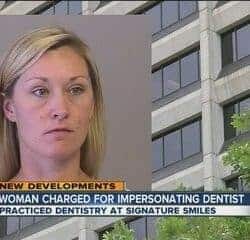
Paige Maples of Oklahoma presents an unusual two-offense record: she first embezzled from a dental employer, taking approximately $23,000, and then — in a separate subsequent matter — attempted to impersonate a licensed dentist. The two offenses share the same enabling condition — access to dental practice environments — but represent distinct forms of risk that practices face from people who work within them.
The impersonation charge reflected an escalation in both ambition and consequence: rather than stealing money, Maples allegedly attempted to practice clinical dentistry without a license, exposing patients to care delivered by someone not qualified to provide it. The financial theft, serious in its own right, was overshadowed by the clinical fraud that followed. Both offenses resulted in criminal charges.
Dental employment creates two distinct categories of trust: financial trust and clinical trust. Maples’s progression from financial theft to clinical impersonation illustrates that an employee who demonstrates dishonesty in one domain should not be assumed safe in any other. Credential verification — of licensure, training, and background — applied before hiring and maintained through the employment relationship, is the control that addresses both categories simultaneously.
Related reading: It's Not Just Cash That Gets Embezzled!!
Related Cases: Rhode Island (RI)'s Christine Azulay indicted by grand jury | Windsor California's Tatiana Marquez arrested
What the Paige Maples Case Teaches Dental Practice Owners
The Paige Maples case is a reminder that dental embezzlement does not require elaborate schemes — trusted associates who are given unsupervised access to practice finances can exploit that trust in ways that are difficult to detect through routine bookkeeping. By the time the theft is discovered, the losses are typically far larger than any single transaction would suggest, and the practice faces a difficult recovery on multiple fronts: financial, operational, and reputational.
This case reflects a pattern that Prosperident investigators encounter regularly: trusted employees who exploit access to practice finances over an extended period, often using methods that are difficult to detect without forensic-level scrutiny. The length of the fraud period and the total amount stolen both tend to be much larger than practice owners initially suspect.
Dental practice owners who suspect embezzlement — or who want to evaluate the vulnerability of their current internal controls — should consult with Prosperident, the world's leading dental embezzlement investigation firm. Prosperident's investigators have worked on cases across North America and bring a forensic accounting background specifically tailored to the dental industry. Call 888-398-2327 or visit www.prosperident.com/meetwithdavid to schedule a confidential consultation.
Update: Two Convictions and a Lifetime Ban
Maples was convicted of felony embezzlement in 2014, receiving a three-year suspended sentence and $23,000 in restitution. On February 14, 2017, she pleaded guilty to unlawful practice of dentistry and received a five-year suspended sentence, surrendered her dental assistant permit, and was permanently banned from working in dentistry; one remaining count was dismissed.
Source: News On 6 (Tulsa)
Cases Like This Are Far More Common Than Most Dentists Realize.
Most dental embezzlement goes undetected for years—and the average loss is in the tens of thousands of dollars. Prosperident's First Look Financial Review can tell you right now whether your practice has a problem.